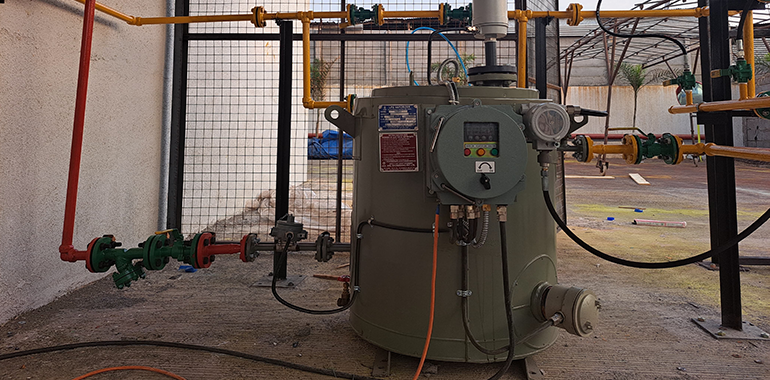
LPG Vaporizers
Overview
An LPG (Liquefied Petroleum Gas) Water Bath Type Vaporizer is a critical piece of equipment used to convert liquid LPG
into its gaseous form, ensuring a consistent and reliable gas supply for various industrial, commercial, and residential
applications. This type of vaporizer utilizes a water bath heating system to safely and efficiently vaporize the liquid
LPG.
How It Works
Liquid LPG Inlet: Liquid LPG enters the vaporizer through the inlet, where it is stored in a heat exchanger coil
submerged in a heated water bath.
Water Bath Heating: The water bath is heated using an external heat source, such as an electric heater, gas burner, or
steam. The heated water bath maintains a consistent temperature to ensure efficient heat transfer.
Heat Exchange: The heat from the water bath is transferred to the LPG through the heat exchanger coil. This causes the
liquid LPG to vaporize.
Gas Outlet: The vaporized LPG is then released through the gas outlet, providing a continuous supply of LPG gas for
downstream applications.
How It Works
Liquid LPG Inlet: Liquid LPG enters the vaporizer through the inlet, where it is stored in a heat exchanger coil
submerged in a heated water bath.
Water Bath Heating: The water bath is heated using an external heat source, such as an electric heater, gas burner, or
steam. The heated water bath maintains a consistent temperature to ensure efficient heat transfer.
Heat Exchange: The heat from the water bath is transferred to the LPG through the heat exchanger coil. This causes the
liquid LPG to vaporize.
Gas Outlet: The vaporized LPG is then released through the gas outlet, providing a continuous supply of LPG gas for
downstream applications.
Key Features
Efficient Heat Transfer: The water bath system ensures uniform heat distribution, promoting efficient and consistent
vaporisation of LPG.
Safety Mechanisms: Equipped with safety features such as pressure relief valves, temperature controls, and automatic
shut-off systems to prevent overheating and pressure build-up.
Durable Construction: Constructed with high-quality materials to withstand harsh operating conditions and ensure
longevity.
Automatic Operation: Many models feature automatic operation with electronic controls for precise temperature regulation
and monitoring.
Versatile Heating Options: Available with various heating options, including electric heaters, gas burners, or steam
coils, to suit different application requirements.
Applications
LPG Water Bath Type Vaporizers are widely used in various sectors, including:
Industrial: Providing a reliable gas supply for industrial processes, manufacturing plants, and power generation.
Commercial: Used in commercial establishments such as hotels, restaurants, and large-scale kitchens for cooking and
heating applications.
Residential: Supplying LPG gas for residential heating, cooking, and hot water systems.
Agriculture: Used in agricultural operations for crop drying, heating greenhouses, and other applications.
Emergency Backup: Serving as a backup gas supply in emergency situations where a continuous gas supply is critical.
Advantages
Reliable Performance: Ensures a steady and uninterrupted supply of vaporized LPG, even in fluctuating demand conditions.
Enhanced Safety: Built-in safety features reduce the risk of accidents and ensure safe operation.
Energy Efficiency: Efficient heat transfer and automatic controls minimize energy consumption and operational costs.
Ease of Maintenance: Designed for easy maintenance and servicing, reducing downtime and maintenance costs.
Scalability: Available in various sizes and capacities to meet the specific needs of different applications and usage
volumes.
Installation and Maintenance
Installation: Should be installed by qualified professionals following the manufacturer’s guidelines and local
regulations. Proper placement, ventilation, and adherence to safety protocols are essential.
Maintenance: Regular maintenance is crucial for optimal performance and longevity. This includes routine inspections,
cleaning, and servicing of components such as heat exchangers, burners, and safety valves.